Startups9 min read
Startup ideas to work on in 2027: six openings created by real deadlines and platform changes
Six startup ideas for 2027, each tied to a rule or platform change you can check yourself: who pays, why now, what the first version needs, what it costs to build in India, and how to test it in two weeks.

Quick summary
- Strong 2027 ideas are tied to a change with a date on it: a new rule, a new platform price, a new search feature. That date gives you buyers who must act, not buyers who might.
- Six ideas below, each with its source: India's DPDP Rules, the EU's CBAM, the European Accessibility Act, WhatsApp's per-message pricing, UPI AutoPay and Google's AI Mode in Indian languages.
- Most of them start as a service plus a simple website, not as software. Build the app after ten people have paid for the manual version.
- A landing page to test an idea starts at ₹12,999 with us; a full first web app starts at ₹2,50,000. Spend the small amount first.
- Skip any idea where you can't name ten real buyers you could message this week.
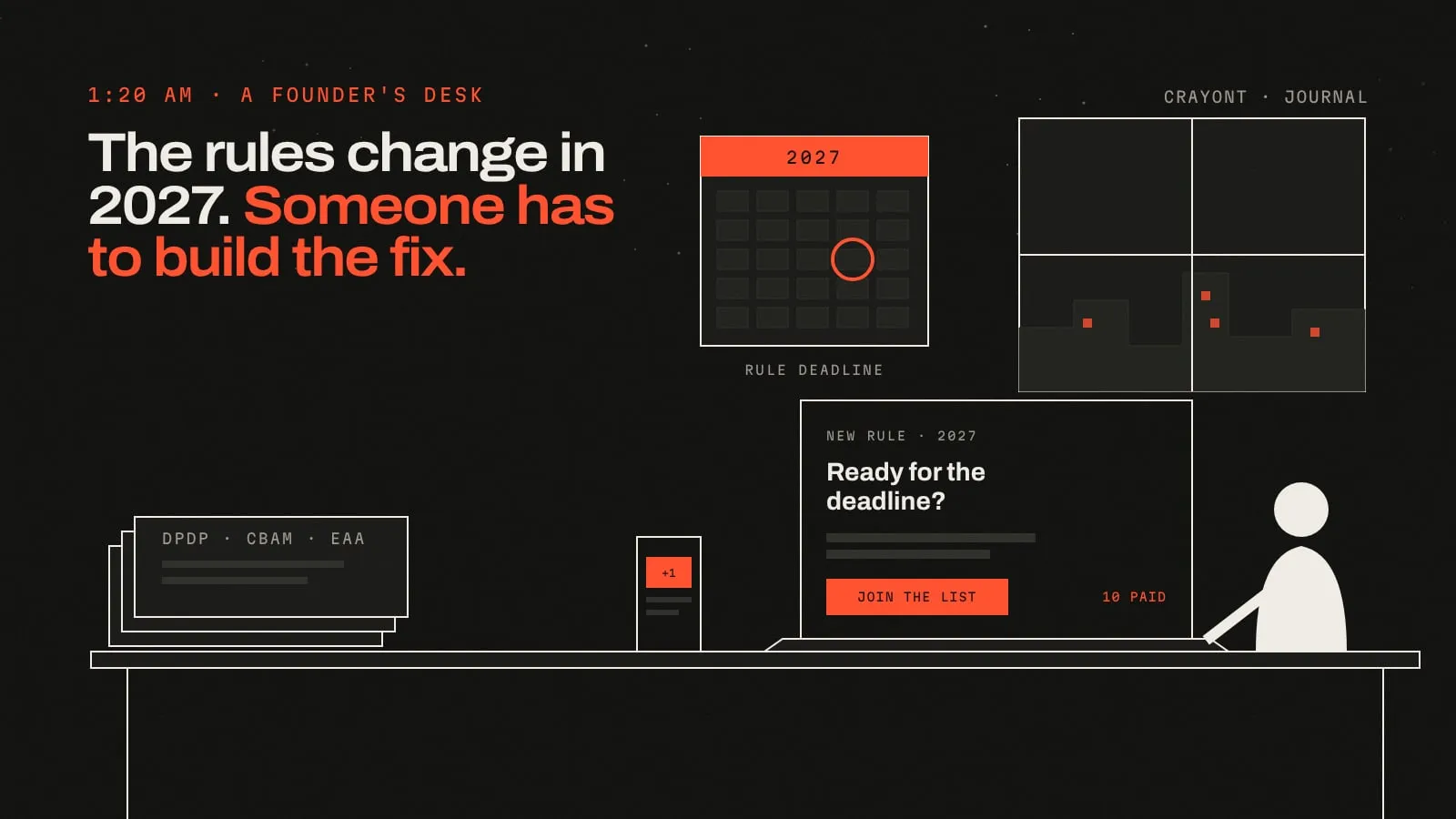
The startup ideas worth your time in 2027 are the ones a calendar is already pushing. When a law, a platform price or a search feature changes on a known date, a specific group of businesses has to act, and they will pay someone to help.
Below are six of those openings. Each one names the change and links the official source, says who pays, what the first version needs, what it costs to build, and how to test it before you write much code. Half are aimed at Indian businesses; the rest are for Indian teams selling to Europe.
Most “startup ideas for 2027” lists we read while researching this post are broad trends (AI, robotics, climate) with no source, no buyer and no price. Others are useful but written for the US and EU only. This one is written for a small team in India that wants to start this quarter.
1 Jul 2025
WhatsApp charges per message
Service replies inside the 24-hour window are free.
Nov 2025
DPDP Rules notified
An 18-month phased timeline starts.
1 Jan 2026
CBAM definitive regime
EU importers need emissions data from suppliers.
2027
The deadlines land
DPDP's main dates, and a weekly CBAM certificate price.
How we picked them
Every idea had to pass four checks:
- A dated trigger. Something changed or will change on a date we could confirm from an official source.
- A buyer you can name. A type of business that has the problem, and that you can reach by email, WhatsApp, LinkedIn or a visit.
- A small first version. It can start as a service plus a website, run by one or two people.
- A real cost. We price the first build from our own price list, because that’s the number we know is true.
If a date is pushing the buyer, you don’t have to.
1. DPDP compliance kits for small Indian businesses
The trigger. The government notified the Digital Personal Data Protection Rules in November 2025 with an 18-month phased compliance timeline, which puts the main deadlines in 2027. The same release talks about a “facilitative compliance regime for startups and smaller enterprises”, which tells you small firms are in scope and expected to need help.
Who pays. Clinics, diagnostic labs, schools, coaching centres, gyms and housing societies. They collect names, phone numbers, health and student records every day, usually in forms, registers and WhatsApp chats. They don’t have a lawyer on retainer.
The first version. A fixed-price service: map what personal data the business collects, rewrite its notices and consent wording in plain English and the local language, and set up a simple way for people to ask for their data or ask for it to be deleted. Sell it per branch. The software comes later: a consent log and request tracker that the business can run itself.
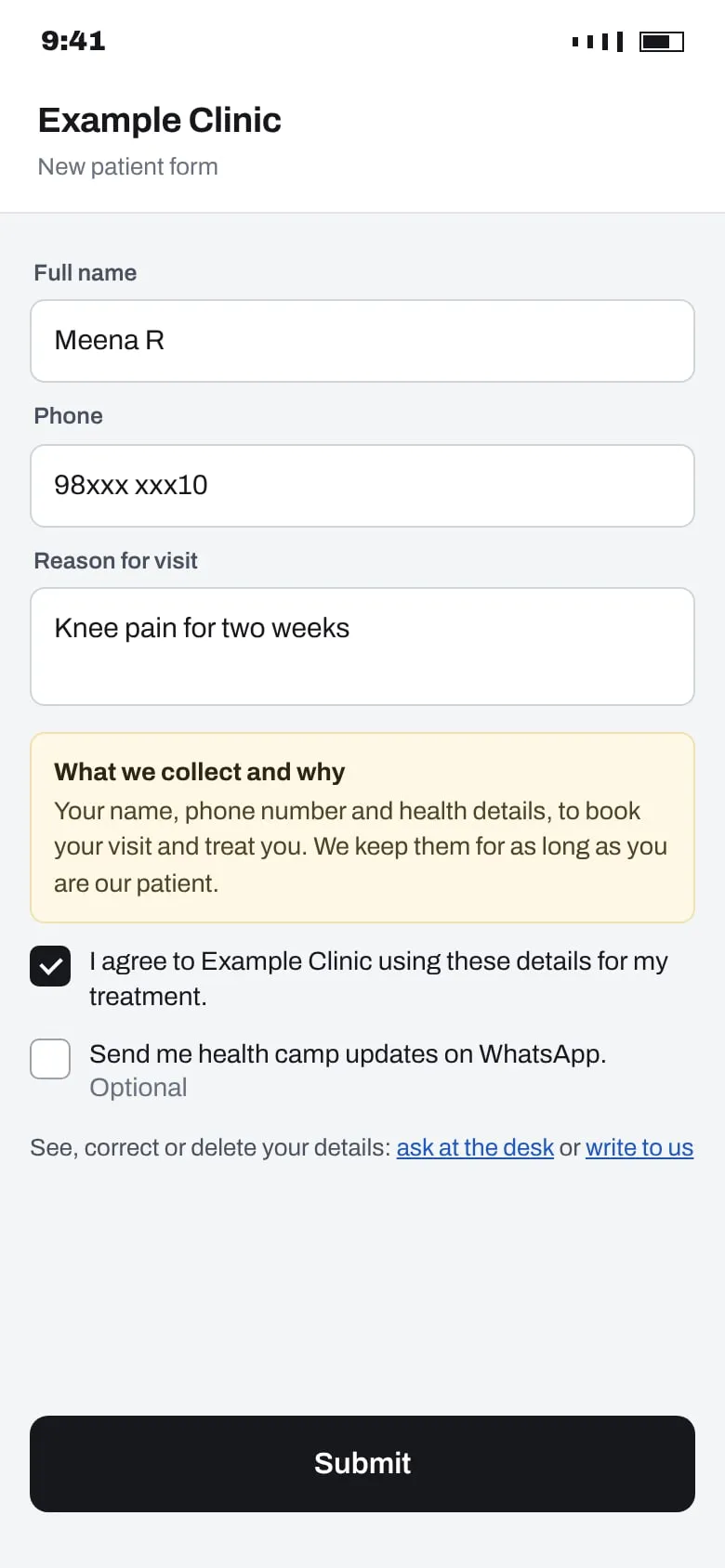
- What is collected and why, in plain words, right where the data is entered.
- Consent for the main purpose, kept apart from optional marketing.
- A simple way to ask for a copy, a correction or deletion.
What it costs to build. Start with a clear one-page site and a booking form. The software version, with logins, a dashboard per business and an audit log, is a web app; ours start at ₹2,50,000.
When not to do this. If no one on the team can read the Rules carefully or work with a lawyer who can. Wrong compliance advice is worse than none.
2. CBAM emissions data for Indian exporters to the EU
The trigger. The EU’s Carbon Border Adjustment Mechanism has applied in its definitive regime since 1 January 2026. It covers cement, iron and steel, aluminium, fertilisers, electricity and hydrogen. EU importers bringing in more than 50 tonnes of these goods a year must be authorised CBAM declarants, and the certificate price moves from a quarterly average in 2026 to a weekly average from 2027.
Who pays. Indian MSMEs that make steel or aluminium parts, fasteners, castings and forgings for EU buyers. Their buyers now need emissions data per shipment, and a supplier who can hand it over cleanly is easier to keep.
The first version. A service that collects a factory’s energy, fuel and material data each month and turns it into the report their EU buyer asks for. The software version is a supplier portal: monthly data entry, calculations, and a report the exporter can send to each buyer.
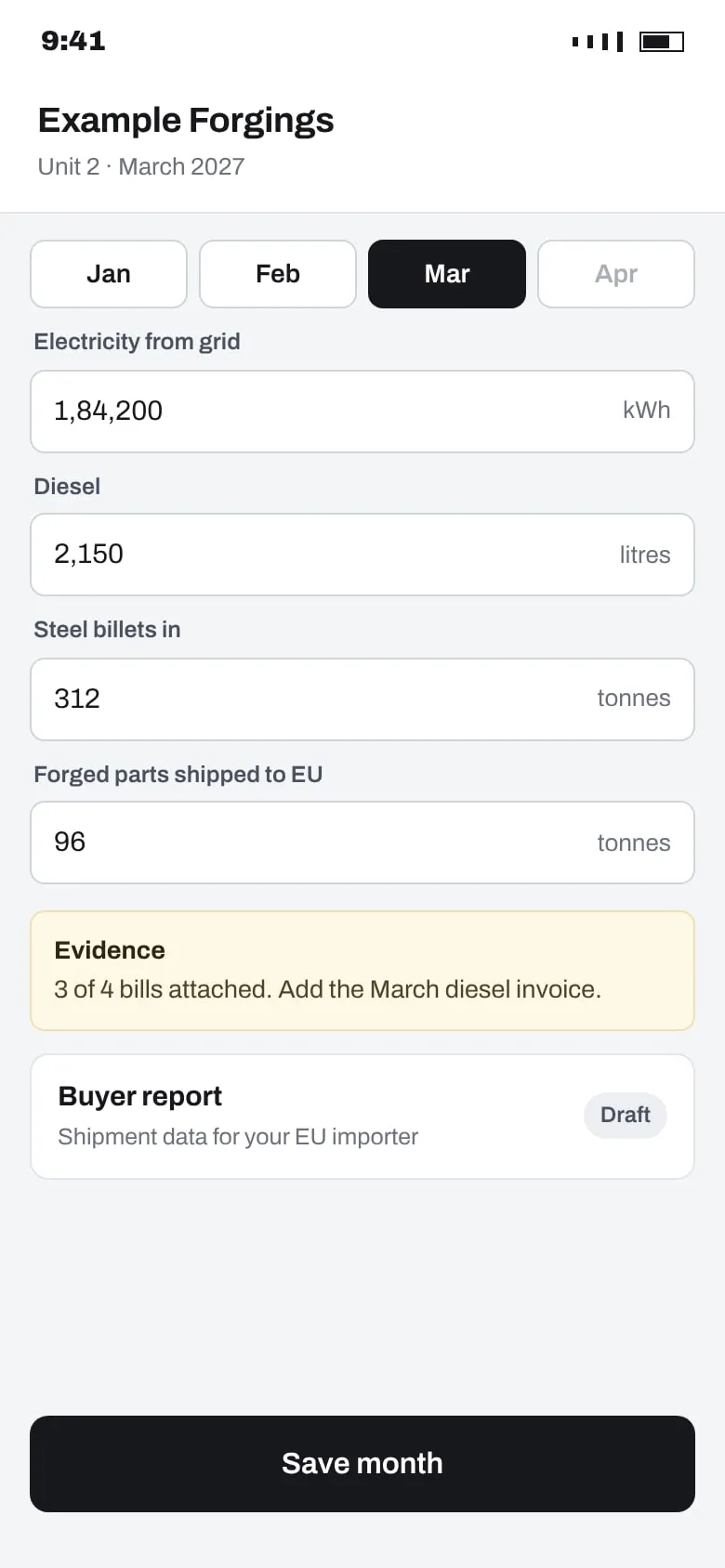
- One short form a month, so the factory's accountant can fill it in.
- Energy, fuel and material in; tonnes shipped to the EU out.
- The output the exporter sends to each EU buyer.
What it costs to build. A credible English site for an export-facing service starts at ₹60,000 with us. The portal is a web app, from ₹2,50,000.
When not to do this. If you can’t get a qualified verifier or carbon accountant on board. The method has to stand up to the buyer’s checks.
3. Accessibility fixes for shops that sell into Europe
The trigger. The European Accessibility Act lists e-commerce among the services it covers. That reaches online shops selling to EU consumers wherever they are run from, including India, the UK and the Gulf. Check the Act for the exemptions that apply to very small businesses.
Who pays. Indian D2C brands with EU customers, export brands in textiles, leather, handicrafts and home goods with their own online shop, and the agencies that built those shops and now get asked about it.
The first version. An audit and fix service: test checkout, product pages and forms with a keyboard and a screen reader, fix contrast, labels, focus states and alt text, and write the accessibility statement. Sell it at a fixed price per site, plus a yearly re-check.
What it costs to build. You need a site that proves you know the subject, and it has to pass its own audit. Ours start at ₹60,000 for up to 8 pages. If you later build a scanner product, that’s a web app.
When not to do this. If you plan to sell an “accessibility overlay” widget as the fix. Real fixes are in the site’s code and content.
Sell this
An audit, the fixes in the code, and a yearly re-check
Contrast, labels, focus states, alt text and the statement.
Not this
An overlay widget that claims to fix everything
The problems stay in the site's code and content.
4. WhatsApp reminders and bookings for clinics and tuition centres
The trigger. Since 1 July 2025, the WhatsApp Business Platform charges per message instead of per conversation. Two details make small-business tools cheaper to run: free-form replies inside the 24-hour customer service window are free, and utility template messages sent inside that window are also free.
Who pays. Clinics that lose slots to no-shows, tuition centres chasing fees and batch changes, salons, physiotherapists and labs. Most of them already run their business on one WhatsApp number.
The first version. A booking page linked from the business’s Google profile, which sends the customer to WhatsApp. Confirmations and reminders go out as utility messages, and the owner gets a simple day view. Price it as a monthly subscription per location.
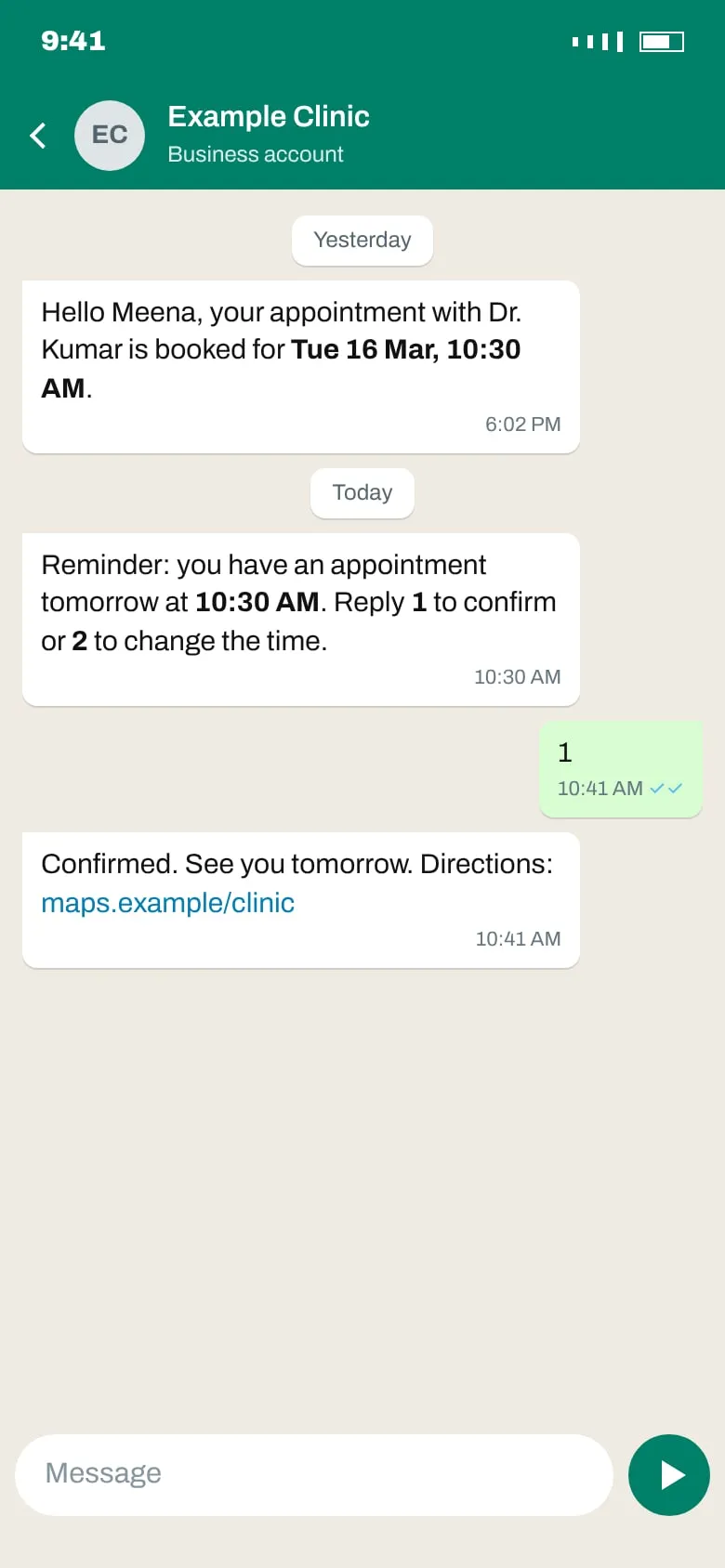
- A confirmation when the slot is booked.
- A reminder the day before, with a one-key reply.
- The reply closes the loop, and the owner's day view updates.
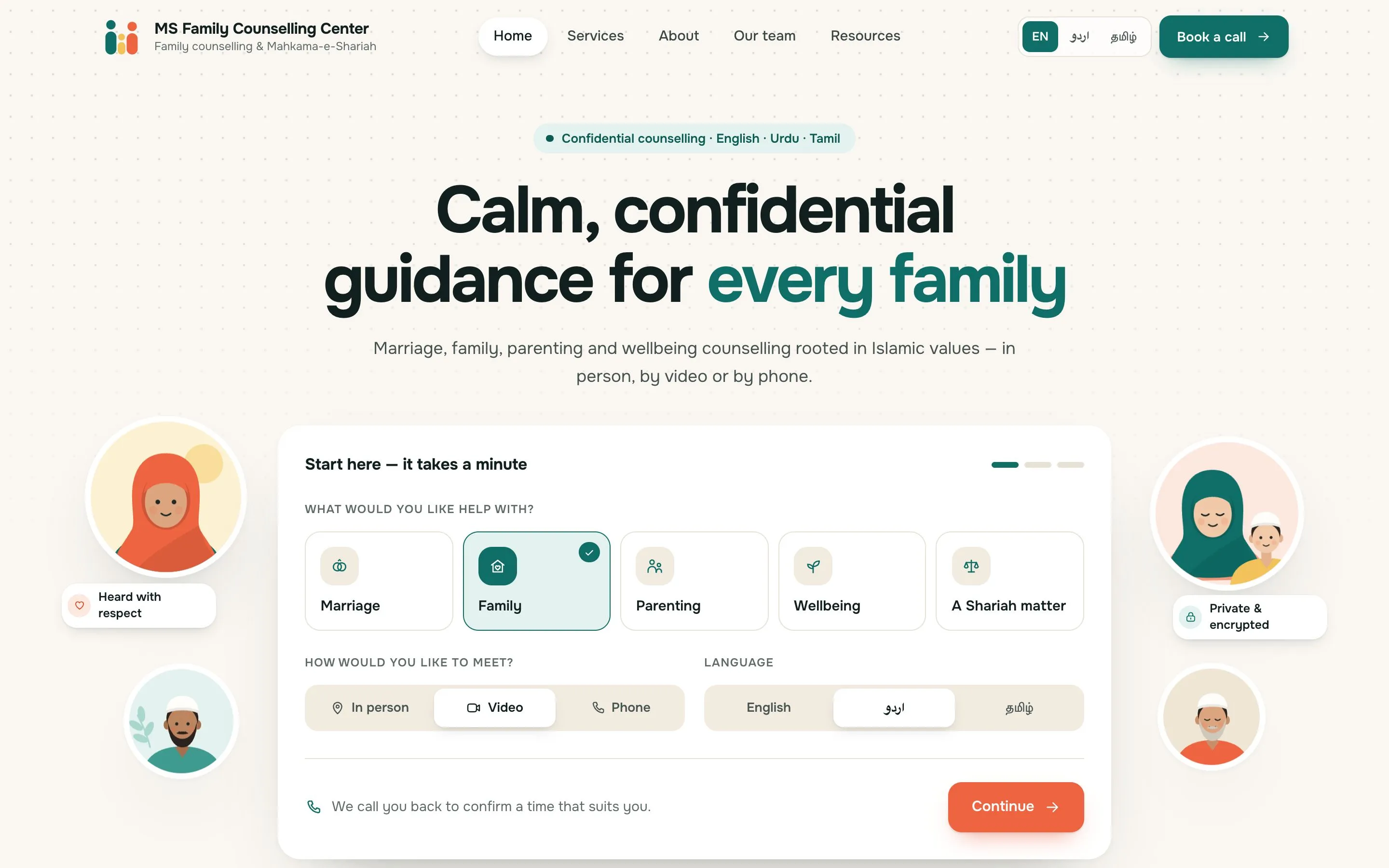
A booking page doesn’t need much. This is one we built for a counselling centre: pick a topic, how you’d like to meet and a language, and the centre calls back to confirm a time.
What it costs to build. Test demand by setting this up by hand for five businesses using our ₹12,999 starter site and a WhatsApp button. The real product, with a booking calendar, the WhatsApp Business Platform integration and an owner dashboard, is a web app from ₹2,50,000.
When not to do this. If your plan depends on sending marketing broadcasts. Marketing templates are paid and users can block you; build around service messages people actually want.
5. UPI AutoPay for monthly fees
The trigger. NPCI’s UPI AutoPay lets customers set up a recurring e-mandate from any UPI app. Most small businesses with monthly fees still collect them by hand, with reminders on WhatsApp and a notebook of who has paid.
Who pays. Tuition centres, music and dance schools, gyms, daycare centres, housing societies and anyone else who charges the same people every month.
The first version. A fees page per business: the parent or member picks a plan, approves a UPI AutoPay mandate through a payment gateway that supports it, and the owner sees who is paid, who is due and who has cancelled. Charge a small monthly fee per business plus the gateway’s charges.
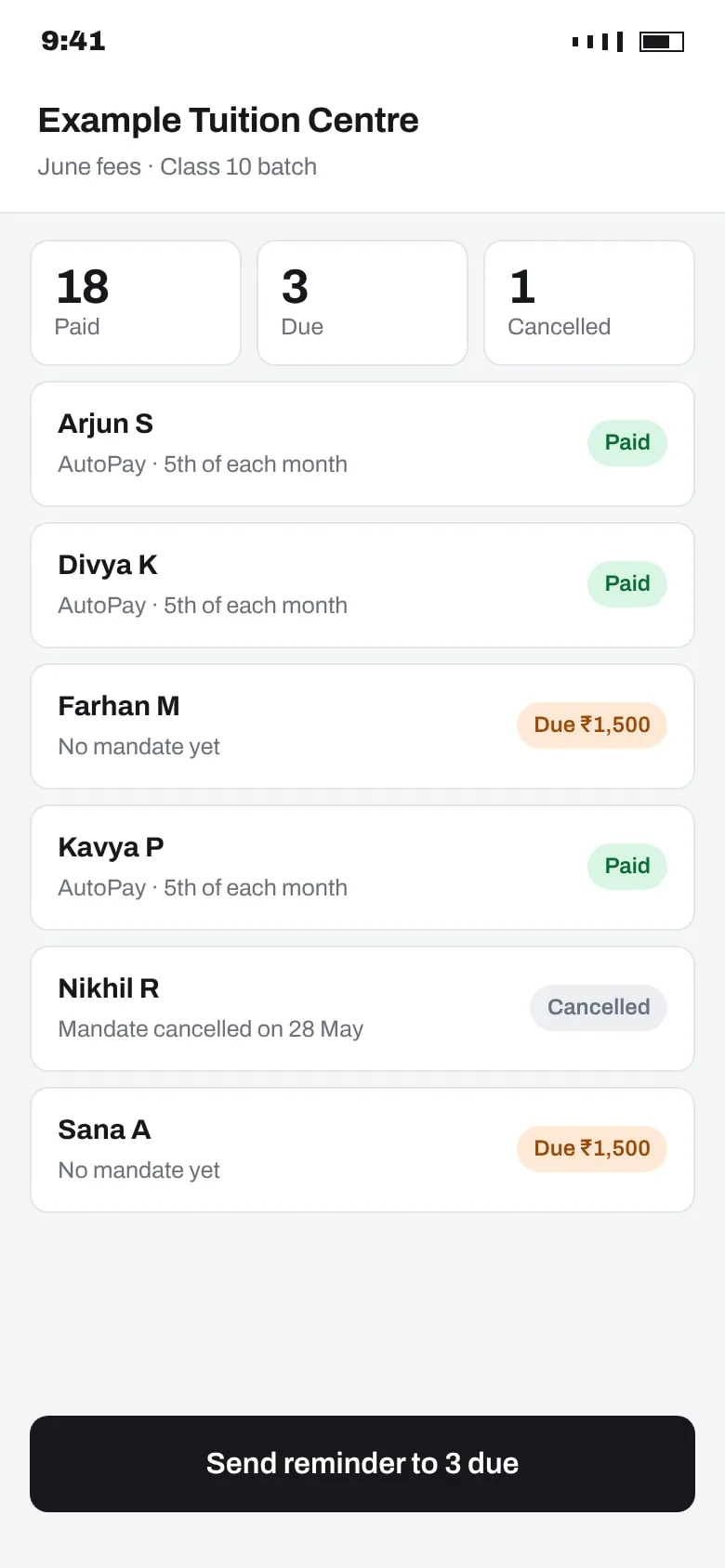
- The month at a glance: paid, due and cancelled.
- Who hasn't set up a mandate yet, and how much is due.
- A cancelled mandate shows up the day it happens.
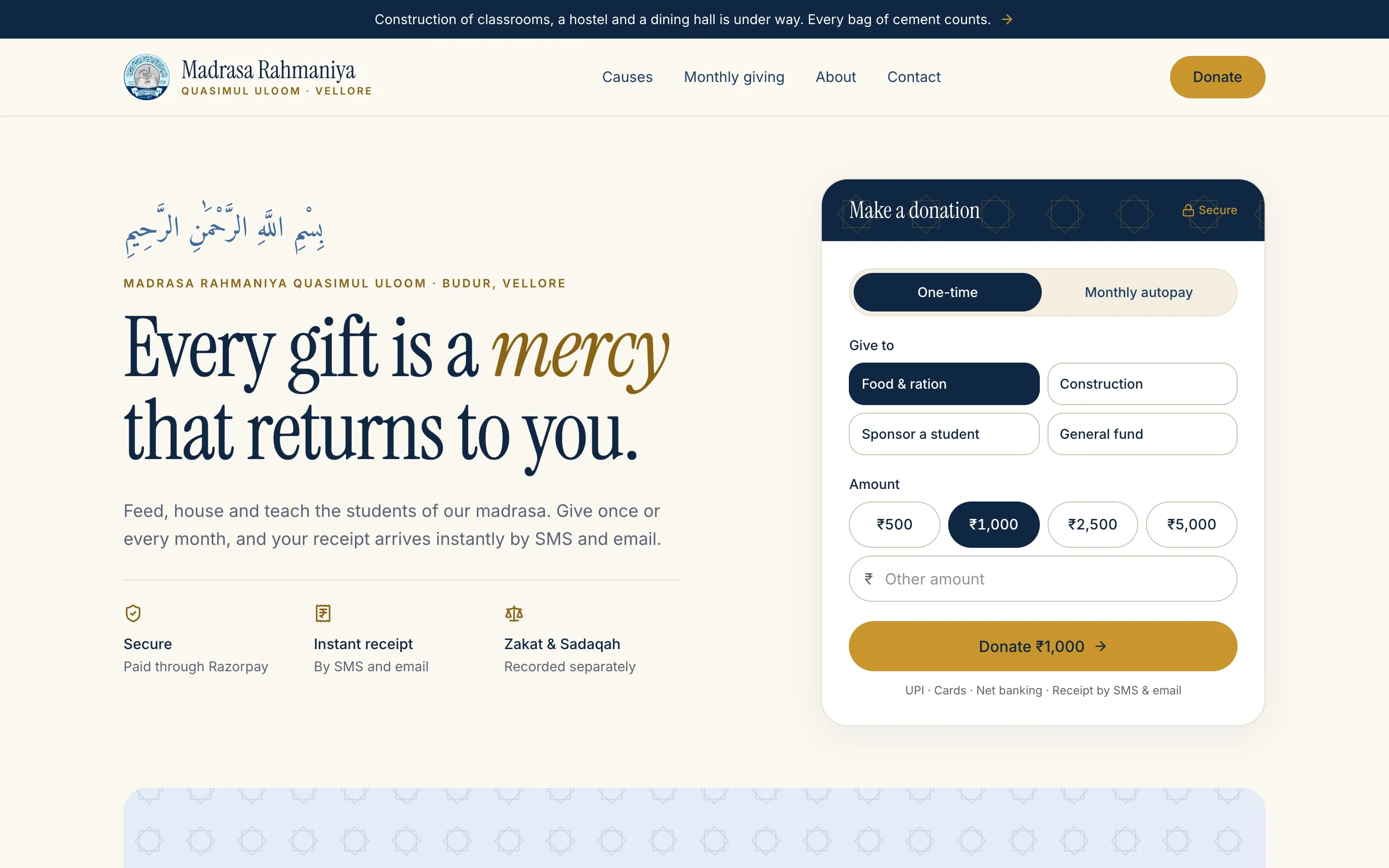
Monthly payments by autopay already work on small sites. The donation site we built for a madrasa in Vellore has a “Monthly autopay” option next to one-time giving, paid through a gateway:
What it costs to build. A tuition centre’s own site starts at ₹7,999 with us, which is a good way to meet and learn from your first customers. The fees product is a web app from ₹2,50,000.
When not to do this. If you’re planning to hold customer money yourself. Leave that to a licensed gateway and build the layer the owner sees.
6. Local AI-search visibility checks in Indian languages
The trigger. Google brought AI Mode to India in June 2025. In October 2025 it added Bengali, Kannada, Malayalam, Marathi, Tamil, Telugu and Urdu, and started rolling out Search Live in English and Hindi. People can now ask long questions in their own language and get an AI answer that names a few businesses.
Who pays. Local businesses that depend on being found: clinics, schools, lodges, restaurants, builders, and the small agencies that look after them.
The first version. A monthly check-up: ask a fixed set of questions in English and the local language, record which businesses are named, compare with the client’s competitors, then fix what can be fixed. That means the website’s facts, the Google Business Profile, pages that answer common questions, and reviews.
What it costs to build. A site of up to 8 pages starts at ₹60,000 with us. A tool that runs the questions and tracks the results over time is a web app.
Test any of these in two weeks
Before building software, run the idea as a service. This plan costs very little and tells you more than a pitch deck.
| Day | What to do |
|---|---|
| 1–2 | Write one sentence: who has the problem, what changes and on what date, and what you’ll do about it. Link the official source. |
| 3–5 | Put up a one-page site: the problem, the price, what’s included, and one button (book a call, pay a deposit or join a list). Make it fast and readable on a phone. |
| 6–10 | Message 50 named businesses that fit, one by one, by email, WhatsApp or a visit. No bulk blasts. |
| 11–14 | Count replies, calls and payments. Ten paid customers for the manual version means it’s time to build. Zero means change the buyer or the offer, not the colour of the button. |
Write down the questions people ask on those calls. They become your FAQ, your landing page copy and the first spec for the app.
The full two-week planHow to validate a startup idea with a landing page in 2027, from IndiaA quick filter before you commit
Score each idea from 0 to 2 on each line. Anything under 7 out of 10 goes back in the drawer.
Five lines, 0 to 2 points each
- Deadline: is there a dated change with an official source?
- Reach: can you name and contact 50 buyers this month?
- Pain: do they lose money, a customer or a licence if they ignore it?
- Manual first: can you deliver it by hand for the first ten?
- Fit: does someone on your team know this industry from the inside?
What the first version costs
These are our starting prices, from our services page. Final prices are fixed after a written spec.
| What you need | Starts at |
|---|---|
| A one-page site to test an idea, or a site for a small local business | ₹12,999 (with a free sample homepage first) |
| A marketing site of up to 8 pages with a CMS | ₹60,000 |
| A web app or platform with logins, a dashboard and integrations | ₹2,50,000 |
The web app development page covers how we scope a first version. If you’re at the earlier stage, our guide on what a startup should build first explains the step from a launch page to a product. You can see shipped projects in our work.
If one of these ideas fits your team, or you have your own and want a second opinion on the first version, tell us about it. We’ll reply within a working day with what we’d build first and what it would cost.
Questions people ask
- What is a good startup idea for 2027?
- One where a dated change forces a specific group of businesses to act, and where you can reach those businesses directly. Examples in this post: helping Indian small businesses meet the DPDP Rules' 18-month timeline, helping Indian steel and aluminium exporters supply emissions data for the EU's CBAM, and using WhatsApp's free utility messages to build reminders for clinics and tuition centres.
- Which startup ideas work well in India in 2027?
- Ideas that ride India's own rails: UPI AutoPay for recurring fees, WhatsApp for customer contact, Google Search's AI Mode in Tamil, Telugu, Bengali and other Indian languages, and compliance help for the DPDP Rules. Each has a large base of small businesses that need help and won't build it themselves.
- How much does it cost to build a startup MVP in India?
- It depends on what the first version is. With us, a landing page or small site to test demand starts at ₹12,999, a marketing site of up to 8 pages starts at ₹60,000, and a web app with logins, a dashboard and integrations starts at ₹2,50,000. The final price is fixed after a written spec.
- Should I build an app first or validate the idea first?
- Validate first. Put up a one-page site that names the problem, the price and a way to sign up or pay, then send it to people who have the problem. If ten of them pay for a manual version, build the software.
- Can Crayont build the first version of my startup?
- Yes. We're a two-founder design-engineering studio in Vellore, India, working with founders in India and abroad. Send us the idea and who it's for, and we'll reply with what the first version should include and a fixed price.
Keep reading
All notes →- Side projects developers can launch in 2027: small tools for people you can actually reachSix side project ideas for developers in 2027, built for buyers you can walk up to: shops, tuition centres, clinics, print shops and trusts. With the free-tier maths on Cloudflare Workers and D1, and what we learned shipping Redlyn and Fatura.
- AI tool ideas for small businesses in 2027: five small tools you can build, and what they cost to runFive small AI tools to build for shops, clinics and tuition centres in 2027: voice notes to bills, enquiry replies in Tamil and English, price-list search, enquiry sorting and read-aloud updates. With the model for each and the running cost worked out from Cloudflare's published prices.
- How to validate a startup idea with a landing page in 2027, from IndiaA two-week plan to test a startup idea with one landing page before you build: what goes on the page, how to take real deposits with UPI, how to get the first 200 visitors, what to count, and when to stop.